Table of Contents
- 1 Learning Padel is Easier Than You Think
- 2 What is Padel, Actually?
- 3 The Basic Rules Every Beginner Should Know
- 4 What Equipment Do You Need as a Beginner?
- 5 How to Learn Padel Step by Step
- 6 Common Mistakes and How to Avoid Them
- 7 Padel or Tennis: Which is Better for You as a Beginner?
- 8 How Quickly Do You Improve as a Beginner Padel Player?
- 9 Finding a Good Club as a New Padel Player
- 10 Frequently Asked Questions
Klik om te vergroten
Learning Padel is Easier Than You Think
Padel for beginners is more accessible than many other racket sports. You don’t need years of technical training to play your first match and have fun right away. The rules are straightforward, the court is small, and the ball moves predictably — ideal for quickly gaining control.
What is Padel, Actually?
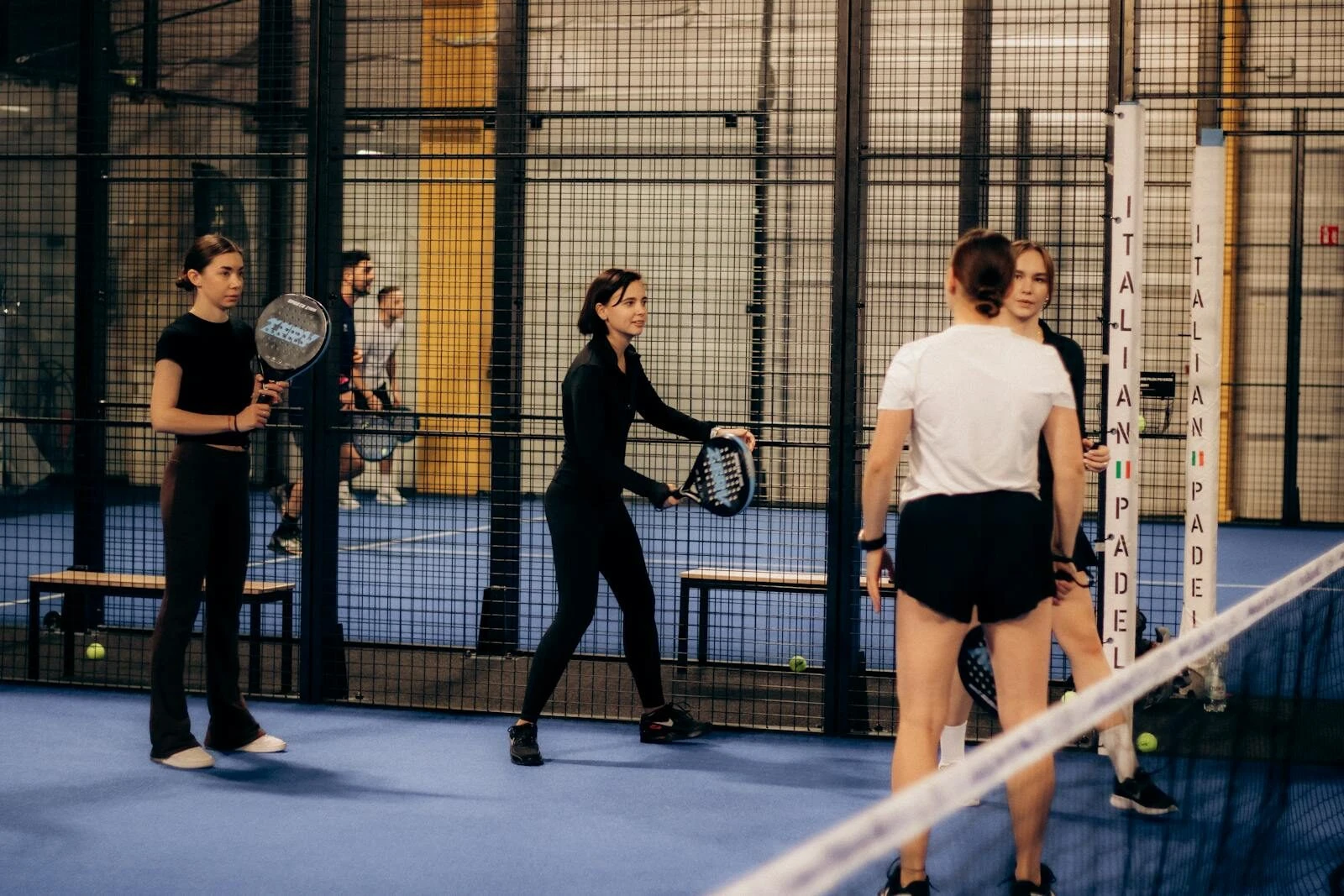
Padel is a racket sport that combines elements of tennis and squash. You always play with four players on an enclosed court measuring 20 by 10 meters. The glass walls and metal fences are part of the game — you can hit the ball back after it bounces off the wall. This makes padel unique and tactically surprising.
The sport originated in Mexico in 1969 and has grown explosively in Spain and Argentina. Currently, over 25 million people worldwide play padel, and in the Netherlands and Belgium, the number of courts and players is also growing significantly each year. The World Padel Tour and organizations such as the International Padel Federation (IPF) and the Dutch Padel Association (NPB) structure the sport at both professional and amateur levels.
A padel match consists of sets and games, similar to tennis. You score points using the traditional tennis scoring system: 15, 30, 40, and game. You win a set by winning six games with a two-game difference. If the score is tied at 6-6, a tiebreak follows. Matches typically consist of two or three sets.
The major difference from tennis lies in the serve: you always serve underhand, and the ball must bounce on the ground before crossing the net. This makes the serve much less dominant than in tennis and ensures that rallies are longer and more exciting — even at the beginner level.
The Basic Rules Every Beginner Should Know
Before stepping onto the court, it’s wise to understand the key rules. You don’t need to memorize a rulebook, but a few core points will help you get started right away.
The serve is always underhand and diagonal. You serve from behind the service line, and the ball must land in the diagonal service box of your opponent. After the first bounce, the ball may hit the side wall — that is valid.
A ball is out if it lands outside the court without first touching the ground. If the ball first hits the ground and then the wall, it is still in play. If it directly hits a wall on the side or back without a first bounce, the point is over.
You may use the walls to play the ball back, but only after the ball has already bounced on your side of the court. This opens up a world of creative shots and tactical possibilities. The popular vibora, bajada, and bandeja are shots that specifically utilize the walls and the elevated positional play.
Do you want to understand all the details? Then also read the basic rules of padel for beginners for a complete overview of the regulations, including exceptions and frequently asked situations on the court.
What Equipment Do You Need as a Beginner?
You need relatively few items to get started. However, the right choices make learning much more comfortable and faster.
The Racket is your most important investment. As a beginner, it’s best to choose a racket with a round shape. Round rackets have the center of gravity low near the handle, making them easier to control. The so-called sweet spot — the ideal hitting point — is larger, making errors more forgiving. Expect a budget of €60 to €130 for a decent beginner racket from brands like Bullpadel, Head, or NOX.
Padel Shoes are essential. Do not use regular sports shoes or tennis shoes. Padel shoes have a specific sole profile that provides grip on the artificial grass of the court without offering too much resistance during lateral movements. Running shoes can even be dangerous on padel surfaces.
Padel Balls resemble tennis balls but have slightly lower pressure. Many courts provide balls when renting a court, so it’s not always necessary to purchase your own.
Clothing can be comfortable sportswear. Some clubs require a sporty outfit without nails or metal fasteners that could damage the walls.
A comprehensive overview of all materials, with advice on budgets and brands, can be found in the article about the right padel equipment for beginners.
How to Learn Padel Step by Step
Learning padel goes fastest if you follow a structured approach. Here are the steps that help every new player make quick progress.
Step 1 — Book a Beginner Clinic. Most padel clubs and centers offer introductory lessons lasting 60 to 90 minutes. A certified coach will teach you the basic positioning, grip, and first shots. This prevents you from developing bad habits that are difficult to unlearn later.
Step 2 — Practice the Forehand and Backhand. Start with simple groundstrokes from the middle of the court. Focus on a stable swing, consistent contact, and control. Power will come naturally later.
Step 3 — Learn the Serve. The underhand serve feels awkward at first but is essential. Practice the diagonal direction and ensure your ball consistently lands in the service box.
Step 4 — Play as Many Matches as Possible. Theory helps, but real progress is made on the court. Look for players at the same level through club apps, platforms like PlaytoMic or Matchi, or ask at the desk about beginner matches.
Step 5 — Use the Walls Intentionally. Once your basic shot is stable, start exploring the walls. Begin with the glass wall at the back — let the ball bounce, wait patiently, and play it back. This sense of timing is at the core of good padel.
Common Mistakes and How to Avoid Them
Beginners often make the same mistakes. If you recognize these early, you’ll progress faster and avoid frustration.
The most common mistake is hitting too hard. Padel is a game of control, not a power sport. Those who hit too hard either send the ball out or lose control over direction. Always choose control over power, especially in the first months.
Another common mistake is incorrect positioning on the court. Beginners often play too far back, while padel is played from the net. Try to move forward as quickly as possible after a defensive shot. The net situation is dominant in padel and scores the most points.
Grip also deserves attention. Many beginners hold the racket too tightly, leading to tension and less feel. Hold the racket as if you are holding a bird — firm enough that it won’t fly away, but not so hard that you crush it.
For more concrete pitfalls, check the article on common mistakes among padel beginners, where each of these points is explained in detail with practical corrections.
Padel or Tennis: Which is Better for You as a Beginner?
Many people hesitate between padel and tennis when they want to pick up a new racket sport. Both sports are great, but they are fundamentally different.
Padel has a shorter learning curve. Due to the smaller court, the lower pressure of the ball, and the underhand serve, you can play real rallies after just a few lessons. Tennis requires more technical foundation before it becomes truly enjoyable — the serve alone is a skill that takes months to stabilize.
Padel is more social. You always play doubles, which means communication and collaboration are just as important as individual technique. For those who appreciate the social aspect of sports, padel is an excellent choice.
Tennis offers more individual freedom. You can also play singles and are less dependent on a fixed partner. Moreover, there are more tennis courts available, especially in smaller towns and villages.
Do you have experience with tennis? Then you’ll pick up padel faster. Forehand, backhand, and the general game logic are recognizable. However, the walls, the shorter court, and net tactics require a mental shift. You can read more about this comparison in the article tennis vs. padel: which is better for beginners?
How Quickly Do You Improve as a Beginner Padel Player?
Progress in padel depends on three factors: training frequency, quality of practice, and the levels of your opponents. If you play once a week, you’ll notice clear improvement in shot consistency and positional play after two to three months.
If you play twice a week or more, you can participate in beginner matches or entry-level competitions after six to eight weeks. Many clubs organize internal competitions specifically for new players, providing a perfect environment to grow without the pressure of a regular ranking.
Video analysis is an underrated tool. Have a training partner film you during a match. You’ll immediately see where your position, grip, or timing can be improved. Combine this with feedback from a coach, and your progress will accelerate significantly.
Mental resilience also plays a role. Padel can be frustrating when points are played off the wall in ways you can’t yet read. Accept that this is part of the learning process. Every experienced player has gone through that phase. Stay calm, focus on the game, and your feel for the walls will come naturally.
Finally, play with people who are slightly better than you. This forces you to maintain a higher pace and precision. If you always play with people at the same level, your development will stagnate faster.
Finding a Good Club as a New Padel Player
The choice of your club greatly influences your enjoyment and development. Not all padel locations are the same — look beyond just the nearest court.
When choosing a club, pay attention to the offerings for beginners. Are there introductory lessons, guided training sessions, or beginner matches? A club with an active lesson program for starters provides a structure that significantly accelerates your progress.
Also, consider the atmosphere. Padel is a social sport, and a welcoming community makes it easier to find regular playing partners. Many clubs have WhatsApp groups or apps where players invite each other for casual matches.
Check the quality of the courts. Artificial grass should be well-maintained, lighting should be bright, and glass walls should not show significant damage. Poor courts affect ball behavior and cause unnecessary frustration.
Compare rates. Court rental costs an average of €15 to €30 per hour, depending on location and time. Some clubs offer fixed playing times for a monthly fee — convenient if you want to play regularly without having to reserve each time.
Frequently Asked Questions
How difficult is padel for beginners?
Padel has a short learning curve compared to other racket sports. Most beginners can play a real rally after just one or two lessons. The basic rules are quickly understood, and you don’t need an extensive technical background to get started.
Which padel racket is best for beginners?
Beginners are best off choosing a round racket with a low balance. This type of racket is easier to control and has a larger sweet spot that forgives mistakes. A budget of €60 to €130 is sufficient for a good beginner racket from brands like Bullpadel, Head, or NOX.
Can you use regular sports shoes for padel?
No, that is not recommended. Regular sports shoes or running shoes provide insufficient lateral stability and the wrong grip on artificial grass. Specific padel shoes protect your ankles and provide the right traction on the court.
How long does it take to get good at padel?
With one to two training sessions per week, you will notice clear progress after two to three months. After six to twelve months of regular play and training, you will play comfortably at the beginner to advanced beginner level. The speed of progress strongly depends on the quality of training and the level of your playing partners.
Is padel suitable for people without a sports background?
Yes, padel is accessible to people of all fitness levels and backgrounds. The smaller court and slower ball behavior compared to tennis make the sport less intense in the initial phase. You build up fitness and technique while you play.
Should you take lessons or can you learn padel on your own?
You can partially learn padel on your own by playing a lot, but a few beginner lessons with a certified coach are highly recommended. A coach will immediately correct bad habits in grip, posture, and stroke — things that are difficult to notice on your own and that are hard to unlearn later.